
01
Coffee Beans
Intro
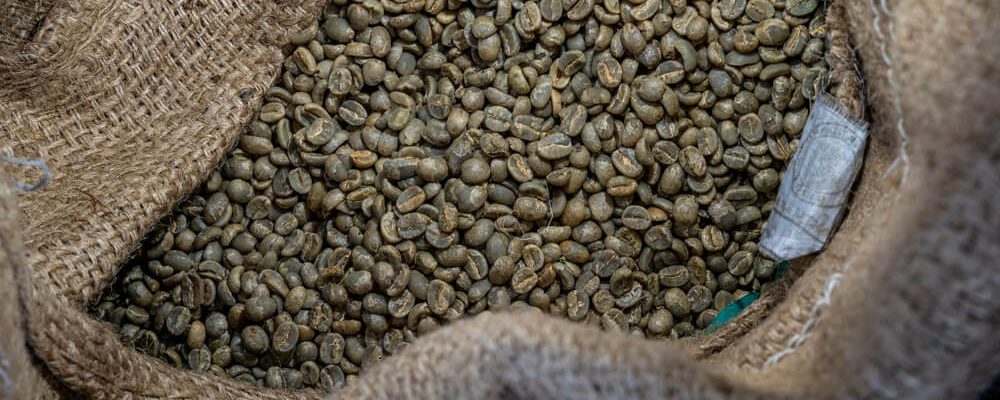
We sources and exports the finest conventional and certified Robusta and Arabica (washed and natural) coffee from all of the country’s major growing regions. Uganda’s natural coffee is famous to the world market and given that we take great pride in our ability to comprehend the dynamics and requirements of business-to-business customers, we would like to promote to you a broader awareness of this celebrated coffees’ origin. Presently, we export green coffee for the overseas markets. Furthermore we have always been compatible with demands and quality required by our esteemed customers.
Coffee Varieties
Amma Trading exports two coffee varieties. These are the two popular types grown in Uganda, in the Rwenzori Mountains, Mount Elgon and West Nile region, and it is very encouraging that the quality of Uganda’s coffee is getting better and better. Let’s take a look at Arabica and Robusta together with us.
Robusta Coffee Beans
The Lake Victoria Basin is the primary growing region for Robusta coffee, which is derived from the coffee canephora plant. Compared to coffee derived from coffee arabica, it is renowned for having a high level of bitterness and a low level of acidity. Compared to Robusta beans, Arabica beans, which are found between 200 and 800 meters above sea level, typically grow at greater elevations. Because it produces more attainable product per area than arabica and because harvesting its coffee beans costs significantly less than that of arabica, its output is also more robust. Another benefit is that the Robusta strain of the plant is probably more resilient to plant diseases and wilts, making it a less dangerous crop to depend on. Due to its high bitterness is examined to be less popular on the global market in parallel to arabica.
Mostly, Robusta is sun-dried, although in this recent years there have been moderate attempts to reintroduce the wet-processing. These kinds of interventions are on-going today, which is under the aegis of the UCDA.
The two varieties of robusta that are grown in Uganda are called “Nganda” and “Erecta.” High-yielding, vegetatively propagated, self-sterile clones of both kinds are combined in a comprehensive clonal replanting scheme. The offspring are true to type and may maintain the traits of their parents, which include high yielding, accelerated maturation, and the production of larger beans with better liquor qualities. They also frequently exhibit resistance to the disease known as coffee leaf rust.
Uganda Robusta had an intrinsic quality that always been excellent and the on-going replanting program which is locally developed in a clonal material that is likely to result in a general revival of the country’s ability to supply goods, and neutral liquoring coffee. Robusta in Uganda is grown at relatively high altitudes, some as high as 1,500 meters, making these coffees especially attractive for the fast-growing espresso industry. However, the bulk of the Robusta can be used in the production of instant coffees and which is as inexpensive fillers for blends.
Arabica Coffee Beans
What is Processing
In its most basic form, coffee is a fruit. On trees, coffee beans develop within fruits that resemble cherries. These coffee cherries have pits, just like other cherries. Typically, there are two seeds—the coffee beans—in each pit. The coffee beans are separated from the cherries after they have been harvested. Coffee cherries have multiple layers, including pulp, pectin, parchment, silver skin, and outer skin, making this process more intricate than it first appears. In order to acquire coffee beans, farmers must thus remove these layers. We refer to this process as processing.
The steps of washed coffee
There are various approaches available for processing coffee. One of the most popular methods is washed, or wet, processing. The fruit must be taken out before it dries. This is a detailed explanation of how washing processing operates.
Stage 1: Sorting
To separate the ripe and unripe coffee cherries, they are first gathered and submerged in floating water. Good coffee, which is ripe, will sink to the bottom, while bad coffee, which is unripe, will float to the top.
Stage 2: Pulping
Removing the cherry’s skin or pulp is the next step. After the mature cherries are placed in a de-pulping machine, the seeds, also known as coffee beans, are extracted.
Stage 3: Fermentation
The seeds move through a channel into a large water tank. If any seeds float to the top of the water, they’ll be removed. The coffee seeds are left in the water tank for about 18-24 hours. However, this duration can fluctuate depending on various factors, including the temperature, country, and local processes. During fermentation, microorganisms in the seeds create enzymes that break down the seeds’ mucilage, which is a pasty substance responsible for the coffee’s delicious flavor.
Stage 4: Drying
Once fermentation is complete, the seeds are taken out of the water tanks and left to dry. Smaller farms tend to dry seeds under the sun, while larger farms use mechanical dryers. A combination of the two can occur, as well. Whatever drying method is used, the seeds are dried to a moisture content between 10-12%.
Cashew Nut
Intro
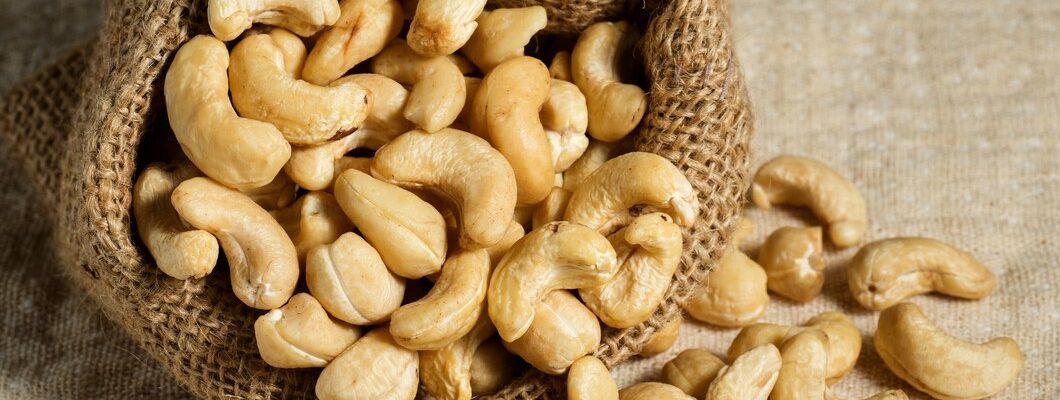
Our premium cashew nuts are sourced from the fertile tropical regions where warm tropical conditions allow the cashew trees to flourish. We partner with local farming cooperatives who have perfected generations-old techniques for growing and harvesting the finest nuts.
Cashew nuts are one of the most sought-after and versatile nuts globally, prized for their rich flavor, crunchy texture, and numerous health benefits. As a leading export company, Amma Trading Company specializes in sourcing and supplying high-quality cashew nuts to meet the growing demand of international markets.
Cashew Varieties
- White Wholes
- Scorched Wholes
- Desert Wholes
- White Pieces
- Scorched butts
- Scorched Pieces
Cashew nuts Grades
We offer a range of cashew nut grades to cater to diverse customer needs:
– W180: Whole cashew kernels, largest size, ideal for snacking and gourmet applications
– W210: Whole cashew kernels, medium size, suitable for baking, cooking, and snacking
– W240: Whole cashew kernels, smaller size, perfect for confectionery, desserts, and sauces
– Butts (B): Broken cashew kernels, ideal for baking, cooking, and industrial applications
– Pieces (P): Cashew kernel pieces, suitable for baking, cooking, and manufacturing
02
03
Vanilla Beans
Intro
Vanilla Specification
| Sr.no | Type of Vanilla | Specification | Vanillin Content |
| 1 | Gourmet beans (16 -21 cm) | Moisture 30 – 35% | 1.8 & above |
| 2 | Gourmet beans (Below 16 cm) | Moisture 30 – 35% | 1.8 & above |
| 3 | TK beans | Moisture 25- 28% | 1.8 & above |
| 4 | Extraction beans | Moisture 20 – 24% | 1.8 & above |
| 5 | Split beans | Moisture 20 – 24% | 1.8 & above |
| 6 | Cuts beans | Moisture below 20% | 1.8 & above |
What makes Ugandan Vanilla Beans stand out?
Don’t Underestimate Ugandan Vanilla Beans! A Flavorful Choice Ugandan vanilla beans often fly under the radar, but they are a remarkable ingredient that deserves recognition. While some may compare them to Madagascar vanilla beans, it’s essential to focus on what makes Ugandan vanilla unique. Ugandan bulk vanilla beans are known for their exceptional quality, distinct aroma, and intense flavor profile. The country’s unique climate and soil conditions create an ideal environment for vanilla cultivation, resulting into plump, moist, and bursting vanilla beans with natural goodness. Each vanilla pod is a testament to the meticulous care and dedication of the farmers who nurture these delicate orchids.
- Distinct Flavor Profile.
- Sustainable Farming Practices.
- Cultural Heritage.
- Culinary Versatility.
Why Ugandan Vanilla
Ugandan vanilla beans often fly under the radar, but they are a remarkable ingredient that deserves recognition. While some may compare them to Madagascar vanilla beans, it’s essential to focus on what makes Ugandan vanilla unique.
Distinct Flavor Profile
Ugandan vanilla beans are known for their rich, bold flavour, characterized by creamy sweetness and subtle notes of chocolate and spice. This complexity makes them ideal for both sweet and savoury dishes. In contrast, Madagascar vanilla tends to have a classic, sweet profile that is widely popular in desserts.
Sustainable Farming Practices
Sourced from smallholder farmers in Uganda, these beans are cultivated using traditional and sustainable farming methods. By choosing Ugandan vanilla, you support local economies and promote environmentally friendly agricultural practices.
Cultural Heritage
The cultivation of Ugandan vanilla is steeped in cultural significance, with farmers employing techniques passed down through generations. This deep-rooted heritage adds a rich narrative to every bean.
Culinary Versatility
Whether you’re baking desserts or enhancing savory recipes, Ugandan vanilla beans bring exceptional flavor and aroma. They offer endless possibilities in the kitchen, making them a versatile addition to your culinary repertoire.
While Madagascar vanilla beans are well-known for their quality, Ugandan vanilla beans offer a unique flavor experience and sustainability that should not be overlooked. Embrace the depth and richness of Ugandan vanilla in your cooking!
Production Process
From the time an order is received until it is prepared for delivery to the client or customer, the processing of vanilla beans takes three months. Farmers harvest vanilla under the guidance of their Peer Farmer Supervisors, who direct the initial sorting process and ensure that the farmer eliminates lacking or too short beans. After that, the vanilla gets transported in sacks to the buying centres, where we purchase it. At each centre a clean dry sorting area is provided and covered with a tarpaulin.
Vanilla Processing
| Length of Beans | Grade of Beans |
| 15 cm and above | I |
| 10-15 cm | II |
| 10 cm | III |
| Splits, cuts and damaged beans | IV |
Killing
| Period of Immersion | Grade of Beans |
| 5 minutes | I |
| 4 minutes | II |
| 2 minutes | III |
| 1.5 minutes | IV |
Sweating
The treated beans are then transferred immediately to a wooden box lined with
blanket, for sweating and kept for 36-48 hours. The temperature initially is to be
48-50oC. By then, the beans will attain light brown colour and start imparting
aroma.
Sun Drying
| Period | Grade |
| 12-14 days | I |
| 7-10 days | II |
| 5-7 days | III & IV |
Slow Drying
| Period of Immersion | Grade of Beans |
| 20-35 days | I |
| 10-20 days | II |
| 3-10 days | III |
| 2-8 days | IV |
Slow Drying
Cocoa Beans
Intro
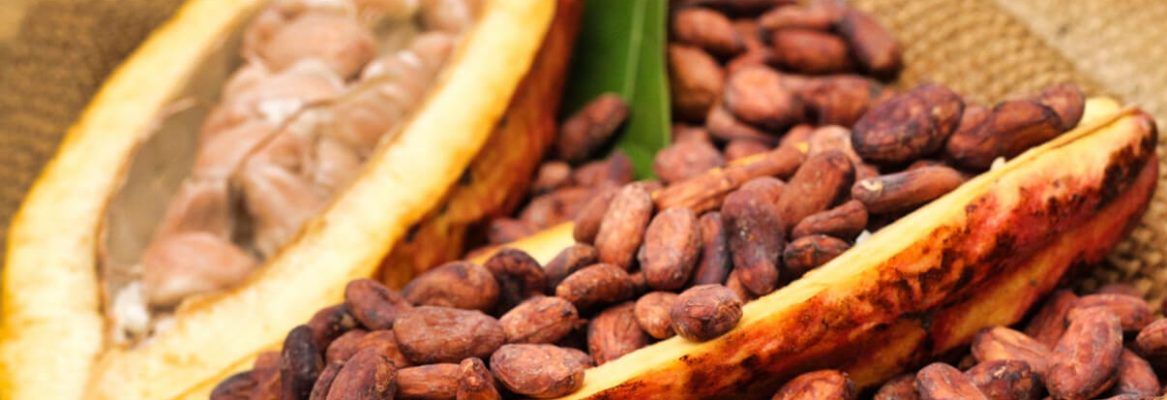
Cocoa finds its home in the sun-kissed lands of Uganda, mainly in the central region, western and southeastern and southwestern regions, and some parts of the eastern region mainly in Busoga region which shine as prime locations for cocoa cultivation. The favourable climate, with moderate temperatures and ample rainfall, provides the ideal conditions for cocoa trees to thrive. With roots deeply entrenched in Uganda’s fertile lands, there is also favourable climatic conditions that allow the cocoa to thrive. It is grown in warm, humid climates and requires well-drained soils, perfect conditions found in Uganda.
Cashew Varieties
- White Wholes
- Scorched Wholes
- Desert Wholes
- White Pieces
- Scorched butts
- Scorched Pieces
Cocoa Growing Conditions
- Temperature: Cocoa trees prefer warm, humid climates with an average temperature of 25-27°C. They can tolerate short periods of cooler temperatures, but they will not thrive in cold climates.
- Humidity: Cocoa trees need high humidity levels of 70-80%. They will not do well in dry climates.
- Rainfall: Cocoa trees need an annual rainfall of 150-200 cm. They can tolerate some drought, but they will not produce well if the soil dries out completely.
- Soil: Cocoa trees prefer well-drained, loamy soils that are rich in organic matter. They will not do well in heavy clay soils or soils that are prone to waterlogging.
- Sunlight: Cocoa trees need full sun to thrive. They will not do well in shaded areas.
Traceability
We commit to fair trade throughout our engagements with the farmers and also adhere to sustainable and responsible sourcing practices. Our goal is to establish and expand long-term contracting facility with cocoa farmers as a way of value addition and mitigation of their risk exposure.
Sustainability in Every Bean
The aim for Amma Trading in becoming the best exporters of cocoa beans from Uganda is to help smallholder cocoa farmers get fair price out of their products by firmly opening up a way for them to reach the global market. To achieve this, quality and sustainability are key factors: our approach is to engage smallholder farmers’ cooperatives, support them with most important farm inputs and closely monitor their operations to ensure that responsibility, ethical standards and quality checks and balances are solidly upheld.
Our company strategy is centered on sustainability. Our commitment lies on preserving the environment and enhancing the financial and societal welfare of cocoa growers. We work tirelessly to improve and sustainably develop our processes. We go above and beyond and are actively working towards attaining full traceability for all of our cocoa for customers with special traceability demands.
The Journey of Cocoa: From Planting to Harvesting
Soil preparation is the first step in effective cocoa production, just as a strong structure needs a strong foundation. Cocoa trees are picky plants that need rich, well-drained soil in order to thrive. From planting to harvesting, cocoa takes two to three years. On the other hand, a cocoa tree may not begin bearing fruit for up to five years.
Planting
Cocoa trees are planted in a nursery bed and then transplanted to the field when they are about 6 months old.
Flowering
Cocoa trees start to flower when they are about 3-4 years old. The flowers are small and white, and they bloom in clusters.
Fertilization
Cocoa trees are pollinated by insects. The flowers only last for a day, so pollination must happen quickly.
Fruiting
Cocoa pods start to form about 5-6 months after pollination. The pods are green at first, but they turn yellow or orange when they are ripe.
Harvesting
Cocoa pods are harvested when they are ripe. The pods are cut from the tree with a machete, and they are then opened to remove the beans.
Fermentation
The beans are fermented for about 5-7 days. This process helps to develop the flavour of the beans.
Drying
The beans are dried in the sun for about 5-7 days. This process helps to remove the moisture from the beans and to preserve them.
Processing
The beans are then processed to remove the husks and grind them into cocoa powder or chocolate.
04
05
Grains
Intro
Vanilla Specification
| Sr.no | Type of Vanilla | Specification | Vanillin Content |
| 1 | Gourmet beans (16 -21 cm) | Moisture 30 – 35% | 1.8 & above |
| 2 | Gourmet beans (Below 16 cm) | Moisture 30 – 35% | 1.8 & above |
| 3 | TK beans | Moisture 25- 28% | 1.8 & above |
| 4 | Extraction beans | Moisture 20 – 24% | 1.8 & above |
| 5 | Split beans | Moisture 20 – 24% | 1.8 & above |
| 6 | Cuts beans | Moisture below 20% | 1.8 & above |
What makes Ugandan Vanilla Beans stand out?
Don’t Underestimate Ugandan Vanilla Beans! A Flavorful Choice Ugandan vanilla beans often fly under the radar, but they are a remarkable ingredient that deserves recognition. While some may compare them to Madagascar vanilla beans, it’s essential to focus on what makes Ugandan vanilla unique. Ugandan bulk vanilla beans are known for their exceptional quality, distinct aroma, and intense flavor profile. The country’s unique climate and soil conditions create an ideal environment for vanilla cultivation, resulting into plump, moist, and bursting vanilla beans with natural goodness. Each vanilla pod is a testament to the meticulous care and dedication of the farmers who nurture these delicate orchids.
- Distinct Flavor Profile.
- Sustainable Farming Practices.
- Cultural Heritage.
- Culinary Versatility.
Why Ugandan Vanilla
Ugandan vanilla beans often fly under the radar, but they are a remarkable ingredient that deserves recognition. While some may compare them to Madagascar vanilla beans, it’s essential to focus on what makes Ugandan vanilla unique.
Distinct Flavor Profile
Ugandan vanilla beans are known for their rich, bold flavour, characterized by creamy sweetness and subtle notes of chocolate and spice. This complexity makes them ideal for both sweet and savoury dishes. In contrast, Madagascar vanilla tends to have a classic, sweet profile that is widely popular in desserts.
Sustainable Farming Practices
Sourced from smallholder farmers in Uganda, these beans are cultivated using traditional and sustainable farming methods. By choosing Ugandan vanilla, you support local economies and promote environmentally friendly agricultural practices.
Cultural Heritage
The cultivation of Ugandan vanilla is steeped in cultural significance, with farmers employing techniques passed down through generations. This deep-rooted heritage adds a rich narrative to every bean.
Culinary Versatility
Whether you’re baking desserts or enhancing savory recipes, Ugandan vanilla beans bring exceptional flavor and aroma. They offer endless possibilities in the kitchen, making them a versatile addition to your culinary repertoire.
While Madagascar vanilla beans are well-known for their quality, Ugandan vanilla beans offer a unique flavor experience and sustainability that should not be overlooked. Embrace the depth and richness of Ugandan vanilla in your cooking!
Production Process
From the time an order is received until it is prepared for delivery to the client or customer, the processing of vanilla beans takes three months. Farmers harvest vanilla under the guidance of their Peer Farmer Supervisors, who direct the initial sorting process and ensure that the farmer eliminates lacking or too short beans. After that, the vanilla gets transported in sacks to the buying centres, where we purchase it. At each centre a clean dry sorting area is provided and covered with a tarpaulin.
Vanilla Processing
| Length of Beans | Grade of Beans |
| 15 cm and above | I |
| 10-15 cm | II |
| 10 cm | III |
| Splits, cuts and damaged beans | IV |
Killing
| Period of Immersion | Grade of Beans |
| 5 minutes | I |
| 4 minutes | II |
| 2 minutes | III |
| 1.5 minutes | IV |
Sweating
The treated beans are then transferred immediately to a wooden box lined with
blanket, for sweating and kept for 36-48 hours. The temperature initially is to be
48-50oC. By then, the beans will attain light brown colour and start imparting
aroma.
Sun Drying
| Period | Grade |
| 12-14 days | I |
| 7-10 days | II |
| 5-7 days | III & IV |
Slow Drying
| Period of Immersion | Grade of Beans |
| 20-35 days | I |
| 10-20 days | II |
| 3-10 days | III |
| 2-8 days | IV |